
 EP NL will become TTEP. Read more here.

Dutch Power Eases on Strong Renewables While Gas Softens on US–Iran Breakthrough
27.05.2026
Short term
Dutch day-ahead baseload prices eased in Week 24, averaging €84.9/MWh, down €6.7/MWh week-on-week from €91.6/MWh in Week 23. Peak power also softened, averaging €59.3/MWh against €67.1/MWh in the prior week, a drop of €7.9/MWh.
The downward pressure was primarily driven by strong renewable output across the region: wind generation came in above normal for most of the week, weighing on prices through the merit order, while solar output was also slightly above normal, suppressing daylight-hour prices. The exception came mid-week, when wind generation dropped on Wednesday and Thursday, producing a temporary upward move in prices, with the daily baseload climbing to €114.3/MWh on Wednesday and €111.9/MWh on Thursday — the firmest sessions of the week. By the weekend, prices fell sharply as demand softened and renewable output remained strong, with Saturday and Sunday clearing at just €29.4/MWh and €30.0/MWh respectively, dragging down the weekly average.
TTF day-ahead prices remained tightly coupled with the month-ahead contract throughout Week 24, continuing to track the broader curve’s response to US–Iran geopolitical risk rather than spot-specific fundamentals. The DA traded at a small, consistent discount to the MA, holding within a narrow range of -€0.30 to €0.00/MWh and averaging around -€0.20/MWh over the week. The spread moved closer to zero around 10–11 June, driven by a slight increase in gas consumption as lower temperatures lifted near-term heating demand, and additionally by a reduction in Norwegian gas flows due to maintenance. The TTF DA outright averaged around €48/MWh over the week, before dropping towards the end of the week as positive developments emerged on the US–Iran deal negotiations.
Electricity (€/MWh)
Gas (€/MWh)
Long term
On the forward curve, the TTF Jul-26 dropped €1.7/MWh to €46.8/MWh and Aug-26 fell €1.6/MWh to €46.9/MWh. The decisive driver was the geopolitical breakthrough late in the week. President Trump and Iran announced an agreement intended to end more than three months of war and reopen the Strait of Hormuz, with the deal scheduled to be formally signed in Switzerland and extending the current US–Iran ceasefire for 60 days while a permanent settlement is negotiated. Trump confirmed the US would lift its naval blockade on Iranian ports and that the Strait of Hormuz would reopen on a “permanently toll-free” basis upon signing.
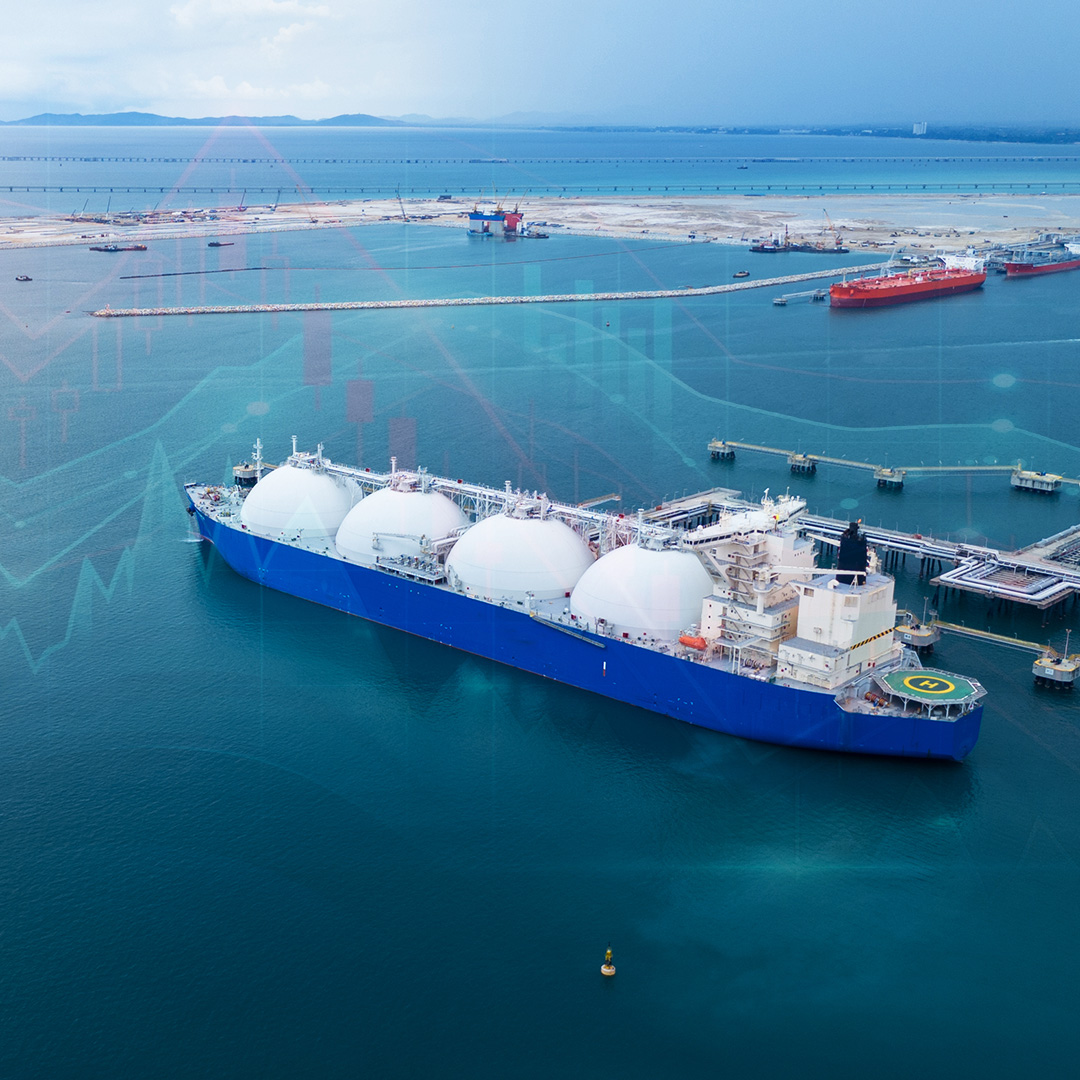
The prospect of restored transit through the Strait — which has been largely closed since the conflict began on 28 February — raised expectations of a gradual normalization of LNG flows and a return of Qatari cargoes to the Atlantic basin, easing the supply concerns that had underpinned the risk premium throughout the conflict. However, some uncertainty persisted: the US and Iran issued conflicting messages on next steps, with Iran’s deputy foreign minister stating that 60-day nuclear negotiations would begin only once the US releases frozen funds, an assertion a US official rejected, while Lebanon remained a sticking point, leaving residual risk that the market continued to price.
Weekly changes
Base (€/MWh)
Peak (€/MWh)
Gas (€/MWh)
CO2 (€/MWh)
Aanmelden wekelijkse marktrapport
Vul hieronder uw gegevens in en ontvang gratis het wekelijkse marktrapport in uw mailbox.
Want to know more about us?
Contact us via our contact page or find out more about our company on the about us page.